Monday, May 30, 2011

Rhubarb Goldberg Machine

The strawberries in our front garden were just starting to blush.  Meanwhile, five pounds of rhubarb were awaiting my hand.  So on my day off, in 80+ New England weather, I became the Rhubarb Goldberg Machine, slicing, dicing, boiling, simmering, pickling, and baking.  I even broke some eggs and brought out the crushed red pepper and local honey.

Here are four new, original recipes using rhubarb without the tardy strawberries.  They are sweet, tangy, creamy, and tart.  Bread pudding, a classic butter tart, and more to follow...


Gluten-Free/Vegetarian/Vegan Option
________________________________________________
Rhubarb Compote
Taste of France
________________________________________________
2 1/2 cups rhubarb, sliced 1/2” thick (about 5 stalks)
1/4 cup plus 2 tbs. water
1/4 cup brown sugar
1 tbs. local honey (optional for vegan recipe)
2 tsp. corn starch
1/4 cup finely chopped walnuts (optional)
1 tsp. lemon zest
Dissolve corn starch with 2 tbs. water.  Mix with all ingredients except nuts.  Heat in a heavy saucepan over medium-high heat, stirring constantly, about 2 minutes.  Reduce heat and simmer 10 minutes.  Stir in nuts and cook 5 more minutes.  Serve at room temperature or slightly chilled.
Gluten-Free/Vegan
________________________________________________
Rhubarb Pickles
Taste of Earth
________________________________________________
1 1/2 cups white vinegar
3/4 cups sugar
7 whole cloves
1/4 tsp. crushed red pepper 
10 stalks of rhubarb, cut to 3” lengths
2 pint-size mason jars
In small sauce pan, dissolve sugar into vinegar and bring mixture to boil.  Add cloves and red pepper and simmer 10 minutes.  Keep two sanitized mason jars in a bowl of hot water in preparation.  Fill each jar with half the rhubarb stalks.  Pour vinegar mixture over stalks and secure lids.  (Leave a half-inch of space if canning.  Can in hot water bath ten minutes.)  For immediate use, let cool on towel on counter, then refrigerate overnight.
Vegetarian
________________________________________________
Rhubarb Goldberg Machine 
Taste of Earth
________________________________________________
1 1/2 cup unbleached flour
1/2 cup white sugar
2 tsp. baking powder
1/2 tsp. salt
1/4 cup butter, melted
2 eggs
1 cup strawberry yogurt
1/4 cup buttermilk
1 cup rhubarb stalks, sliced 1/4” thick 
1 cup old-fashioned oats
1/4 cup sliced almonds

This muffin has it all, but bakes light and refreshing.  Melt butter.  Whisk in eggs, then yogurt and buttermilk.  Sift dry ingredients.  Mix in rhubarb, oatmeal, and nuts.  Stir wet ingredients into dry until just moistened.  Fill 12 greased muffin tins.  Bake at 400ºF 20-25 minutes.


Vegetarian
________________________________________________
Creamy Cold Rhubarb Soup 
Taste of Norway
________________________________________________
5 rhubarb stalks, peeled (reserving peel for stock) and sliced 
     1/4” thick
3 small pieces of cinnamon bark (or substitute cassia)
3 cups water
1/2 cup white sugar
1 tsp.chopped lemon thyme leaves, reserving stems
1 tsp. chopped mint leaves, reserving stems
1 cup buttermilk 

Combine rhubarb peelings, cinnamon, sugar, herb stems, and water in medium sauce pan.  Bring to boil.  Reduce heat and simmer 10 minutes.  Strain liquid into bowl, compost remaining solids, then return liquid to pan.  Add rhubarb pieces, bring to boil again, then remove from heat.  Stir in buttermilk.  Cool completely.  Serve cold, garnished with chopped mint.

Sunday, May 22, 2011

Chives and Spring Rolls


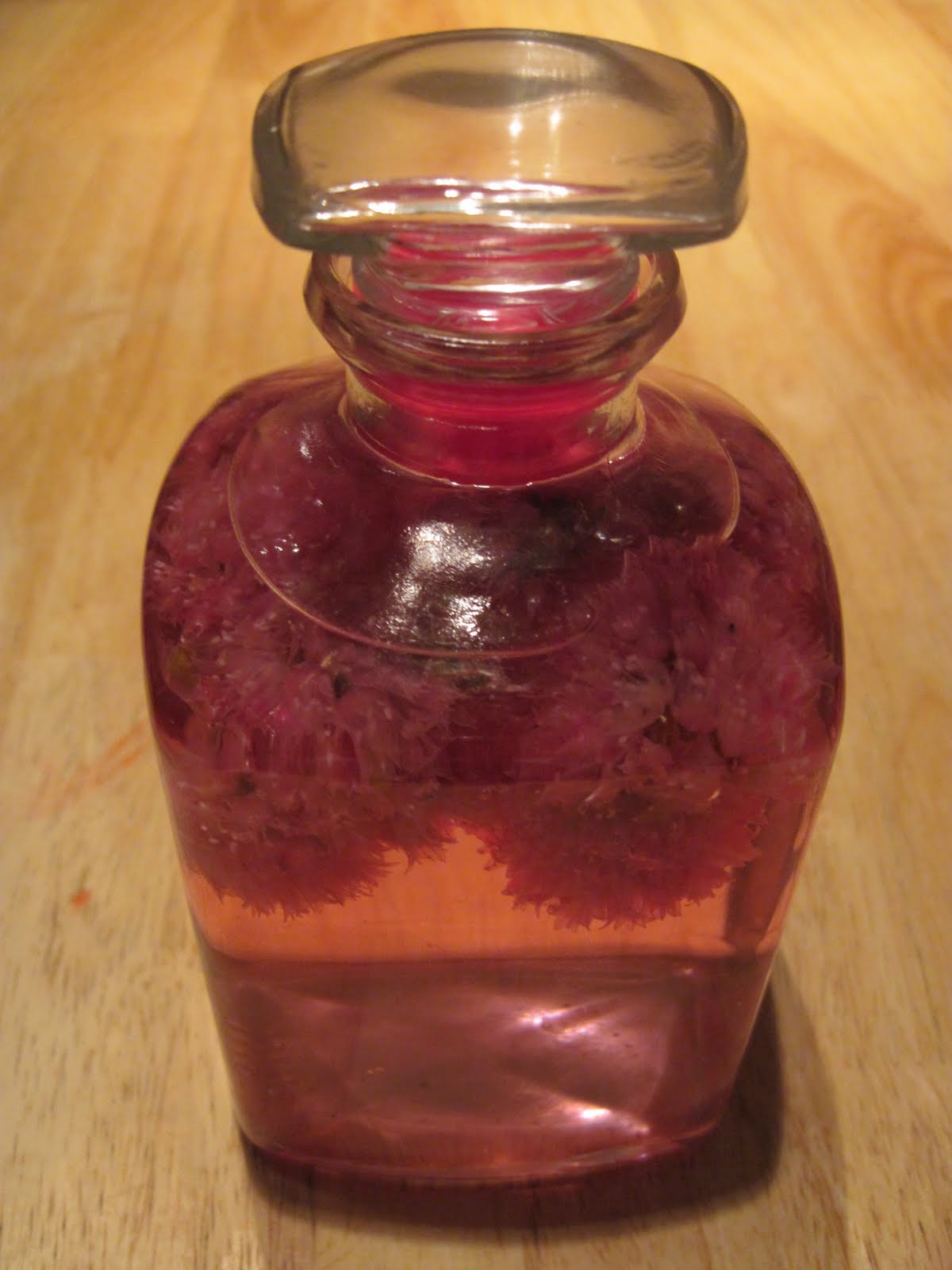
The chives are blooming!  These pretty wild specimens I moved into my garden seem to be doing a good job deterring seed bugs and slugs from my strawberries (in foreground).  But they are so much more...  As I write this, I have 15 flower heads soaking in white vinegar to use in future recipes and dressings.  It's easy: Take a nice glass bottle – these I salvaged from grenadine syrup, a fancy olive oil, and a second-hand shop.  


Wash and dry the bottle and keep warm.  Fill bottle with white vinegar to measure, then heat vinegar to just under boiling.  Stuff bottle with flower heads, then slowly add warmed vinegar.  Seal tightly, then let infuse at least two weeks.  Use on fish, in dressings, or to make sushi.

Meanwhile, those chive stems need not go to waste!  Chop them and use in dressings, on salads, fish, eggs, or the following recipe for spring rolls:

Gluten-Free/Vegan and Wild Option
________________________________________________


Spring Rolls
Taste of Vietnam
________________________________________________
2 oz. rice vermicelli
8 chinese cabbage leaves
16 mint leaves, plus garnish
3 tbs. cilantro
3 (wild) chive stems
1 carrot, grated
2 radish, grated
1 stalk of rhubarb, sliced fine
2 tsp. white sugar
2 tbs. white vinegar
1 cup small local cooked, peeled, deveined shrimp, chopped (optional)
8-10 rice wrappers
Chop cabbage, herbs, and scallions fine.  Combine with other vegetables, sugar, and vinegar.  Bring water to a boil, remove from heat, and add rice vermicelli until soft, about 8 minutes.  Drain, cool with cold water, and drain again.  Cut into inch-length pieces using kitchen shears.  Mix well with vegetables (and shrimp, if using).   Soak rice wrappers one at a time for about 30 seconds.  Place about half a cup of mixture near top of the corner of the wrapper, fold over, and roll tightly.  Tuck in sides half-way through rolling, and roll until end.  Serve chilled, with mint leaves for garnish.   Makes 8-10 rolls.


Tuesday, May 17, 2011

Nasturti-YUMS!

Nasturtiums are one of the easiest and most versatile crops around.  The seeds, leaves, buds and flowers are all edible.  Nasturtiums just require well-drained soil and some sun, and will grow prolifically.  Overfertilized or shady areas may not develop many flowers.  The sunniest locations produce the spiciest flowers. 
 
The seeds are large, so it’s a great choice for young helpers to plant.  Just poke a hole an inch down and about 12 inches apart, and have your helper fill the holes.  Cover and water thoroughly.   Sprouts emerge about a week later.  I like using them at the edge of my raised beds, where they cascade beautifully.  They also are a great “trap crop” to lure aphids, flea beetles, slugs, and cabbage worms away from other crops.  For this reason, they are good companion plants for tomatoes, radishes, cabbage, and cucumbers. (Last year, aphids covered the nasturtiums in one bed, but didn’t touch the tomatoes.  I later found lady bug larva all over them.)   If you want nasturtiums for pest control and for eating, plant a lot.
 
Use fresh, organically-grown flowers and leaves on salads to add a peppery, watercress spike of flavor to salads.   Place a cup of leaves, buds, and flowers in a clean, warm, tight-sealing glass jar and pour a pint of just-boiling white or apple vinegar over it, letting blend immerse three weeks for a zesty vinegar.  Strain out spent plants.  Another option is to chop flowers finely and mix with cream cheese and dill to serve with smoked salmon or in cucumber sandwiches.  Some people even stuff the blossoms themselves.  Save seeds or buds and brine in 2 tbs. salt to one pint of water for 2 days, rinse, and place in a clean and warm glass jar, covering with vinegar heated just to boiling.  Let sit a week and enjoy as a substitute for capers.
 

Saturday, May 14, 2011

Defining America

Looking through the Friday flyers this Saturday morning while eating Yukon Gold home fries with oregano and curry from the garden and a fried egg laid by an Americauna chicken that lives in Rehoboth, I notice a few trends.  The pile is modest, since I'm on the "no junk mail" list.  I peruse the grocery flyers and coupons, mostly full of items I don't buy.  I open a bill.  Then on to the two hardware store flyers, both national chains.

The first one has a variety of grills on the cover, along with various chemicals to kill ants.  Bottom center are American flags for sale.  "Dear America," they say, "please accept our char-grilled offering."  Turn the page, and its grub killer, grub killer, grub killer.  Funny, I thought the grubs were pupating this time of year.  Well, you may have 2-3 more weeks to get them, so hurry!  After that, what're all those chemicals going to do, sitting in the soil?  The rest of the flyer is lawn care, lawn seed, motorized mowers, plastic bird feeders, weed killer, and disposable paint rollers.  I sigh and add the flyer to the recycle pile.

On to the next national chain.  Wow.  Pretty solar lights.  Plants.  Okay, I'm going to turn the page...  The flyer is set up like a magazine.  There are articles on how to decorate and design inside and outside.  There is no VOC paint, a bird feeder to make with the kids using recycled materials and a kit from their store, a project detailing how to build an outside island for family gathering, which includes cloth towels, a recycling station, and yeah, plastic forks and plates, but wow!  They wouldn't put this much effort into advertising this project if they didn't think people would literally buy into it.  While companies can start trends, most see a trend or need and offer to fill it.  I'm hoping that this is what's happening here.  People want to live greener.

My own deck features a second-hand plastic table we put a tablecloth over.  We store my daughter's toys underneath.  The previous owners built in seating, which is divine.  Some day, I may make cushions for it.  Last year, I repaired and repainted the roll-out awning and replaced the front door with a more energy-efficient one.  For now, I'm not making any big plans for renovating.  I will probably improve the gate on the deck.  Maybe add seating around the fire pit.  Definitely organize all the dead wood we've gathered or cut down.  At least it's good to see some greener possibilities.

A chain of events is occurring.  The recession has made people think, "Do I really need this?  Can I fix what I have or buy second-hand?  Can I make it?"  The supermarket cashier asked my husband where we got our mesh produce bags.  Multiple companies, such as Terracycle and Eco-Fi, are making goods from trash.  The first solar-powered plane flew this week.  Are we lawns and propane and bug killer?  A student showed me six inchworms she found in the schoolyard, gingerly putting them back in their home.  How shall we define America now?

Monday, May 9, 2011

Plight of the Bumble Bee


Plight 
    of the
    Bumble Bee 


Bee boxes are a great family project to teach children the importance of bees in our ecosystem.  Bees, much like frogs, are a kind of “Environmental Early Warning System” and world-wide bees have been disappearing. Bumblebees are responsible for pollinating about 15 % of all the crops grown in the U.S. , while bees in general pollinate a third of U.S. crops.  Mason bees are great pollinators of orchards, travelling to multiple trees.  In the wild, birds and bears depend on bumblebees for berries and fruits.  You can help by setting up a bee box to provide shelter and nesting locations for solitary bee species, such as Mason and Bumblebees. The adult bees do not live in the structure, but lay their eggs in pre-existing holes.  They are called “mason” bees because after laying their eggs, they seal the holes with mud or clay.  In the wild, they use holes in tree trunks left by wood-boring beetles or birds.  While these bees produce only enough honey to feed themselves, they will fertilize plants and trees in your neighborhood.  Mason and Bumble bees are friendly and docile and rarely sting. (Just don’t trap them or get them in your clothes.)  Plus, without a queen to protect, solitary bees do not swarm! 

The causes of colony collapse disorder are still unknown, with the latest research suggesting a combined infection of both a fungus and virus as the likely cause.  (That doesn’t rule out pesticides, lack of native plants, mites, and cell phone signals.)  By providing a habitat for our solitary native bees through shelter and plants, we are insuring our future food supply.  There are plenty of bee houses on the market today, but if you would like to build your own, use untreated wood and be careful not to use pesticides/insecticides near their home.  On a four by four inch block in a length of at least a foot, drill 5/16th inch holes about one inch apart.  Staggering the next row will allow you to fit more.  I’ve also tried this with 2”X12” boards, drilling into the 2” side, then screwing several boards together for a bee “condo”.  Although Mason bees are solitary, they don’t mind being close neighbors with other bees.   

In late fall, bee houses should be stored in a sheltered area, such as a garage or shed.  Houses should be cleaned in a mild bleach solution to kill mites, as mites will infect and kill bees.

More plans can be found here: Build a Bee House

Saturday, May 7, 2011

Baked Bunny Bao

Need a taste of spring for that special occasion?   This recipe is more challenging than most, but I hope the results are worth it.  I made these for May Day and another batch for Mother's Day.  I did try steaming them, but the flavors come out much stronger when they're baked.  Let me know how this recipe worked for you.  Kneading until elastic is key.  The second batch (not pictured) were a lot prettier.  Remember, don't overheat the Hollandaise.


________________________________________________
Baked Bunny Bao
Taste of China Meets France
________________________________________________
Bun:
4 cups unbleached flour
1 tsp. sugar
1 tsp. salt
4 tbs. unsalted butter, cut into 1/2” cubes
2 1/4 tsp. active dry yeast
1 cup milk
zest of one lemon
Hollandaise Sauce:
3 egg yolks (reserve whites for filling)
juice of one lemon
1 stick of unsalted butter, melted
1/8 tsp. salt
1/8 tsp. white pepper
Filling: 
1/4 pound Black Forest ham, cut into 1/2” squares
1 egg plus egg whites, poached or fried and chopped
3 tbs. wild garlic chives, or two asparagus, finely chopped
Traditionally steamed, these Chinese buns are baked until just golden, adding a buttery crunch to the lemony dough and savory filling.  For buns, sift together dry ingredients except for yeast.  Cut in butter.  Warm milk to 130ºF on stove and dissolve yeast.  Stir in lemon zest and add milk mixture to dry mixture, mixing until all flour is incorpoarted.  Knead on floured surface until elastic, about 15 minutes.  Return to bowl and cover with hot wet towel, about 40 minutes to let dough rise.
To make Hollandaise sauce, have all ingredients ready.  In double boiler or small sauce pan placed inside larger sauce pan filled with about 2” of water, heat water until barely simmering.  Whisk yolk and lemon together, then add to boiler, whisking constantly until the thickness of custard, about 2 minutes.  (Overheated yolks will scramble.) Gradually add melted butter, whisking rapidly after each addition.  Remove from heat.  Stir in salt and pepper.
Pound down dough and form into 3” log.  Cut into 15 slices and roll each slice into a 5” round.  Divide ham, egg, and chives or asparagus between rounds.  Add one tsp. of Hollandaise sauce to each, reserving the rest for dipping.  Pinch each round closed, using a drop or two of water if dough won’t stick.  Turn bun over and mold into an “egg” shape.  For “bunnies”, use kitchen or herb sheers to cut two ears from center of bun toward first third of bun, careful not to cut through dough into filling.  Make eyes by piercing dough with end of chopstick.  Brush bunnies and/or eggs with about one tablespoon of melted butter.  Bake on parchment or greased cooking tray at 425ºF for 20 minutes.  Serve on assortment of edible greens and flowers, such as mesclun and dandelion greens, dill, violets, and nasturtiums.  Makes about 15 servings. 

German readers

Seeing as I'm getting traffic from Germany to this site (as well as the Netherlands and France), I'll post one of the German/Hungarian recipes I came up with.  It's loosely based on my brother-in-law's recipe and got even my husband to eat Brussels sprouts.  Enjoy!


Gluten-Free/Vegan Option
________________________________________________
Hungary for Sprouts!
Taste of Germany/Hungary
________________________________________________
1 pt. Brussels sprouts
1 carrot
1/2 yellow onion
1 cup broth (vegetable, chicken, or beef)
1/4 tsp. each salt, white pepper, lemon thyme
1 tsp. brown mustard
Meat: 4 sausage links, or 10 slices of bacon, or 1 1/2 cups of textured vegetable protein
Oil for cooking
Wash Brussels sprouts, picking off yellow or discolored leaves.  Halve each and slice halves thinly.  Peel and grate carrot.  Set both aside.  Compost scraps.  (I feed them to our Guinea pigs.)  Heat oil in large sauté pan over medium heat.  Open up sausage links, if using, and cook meat through.  Or cook bacon on stove, using a tablespoon of the fat to start onions.  Or cook vegetable protein until hot.  Set meat aside.  Dice onion and sauté in same pan 3-5 minutes, until translucent.  Add sprouts and carrots and cook 1-2 minutes, stirring well.  Pour in broth and add spices and mustard, stirring well.   Cook 10-15 minutes, testing sprouts for sweetness and cooking until just soft.   Serve with oven-roasted potatoes.